Engines, Powerplants, and Energy Sources |
||||||
The physics of combustion based energy creation The current platform used for creating energy for cars is based on the push pull relationship between the pistons and a cam shaft. Using the explosive force of the piston, the engine is able to create one way movement that translates into rotation once engaged with a cam shaft. The idea itself is counter intuitive, as it makes very little sense when considering that a cam shaft turns in a circular movement. Why then should the engine itself not match that rotation in its energy creation Some facts: traditional car’s engine uses up to about 65% of the energy potentially available from the fuel, just to move all its parts such as pistons and cams, plus what is wasted generating excess heat. Then the transmission uses 6%, the accessory load 2% and idling losses come to about 11% This leaves about 16% of the energy actually engaged in making the wheels turn. |
 The latest technology in engines has pointed towards 4 main aspects of development that are considered to be 'sustainable'
|
|||||
 The traditional rotary re-thought. Todays most updated version of the rotary tries to overcome some of the sealing issues plagued by the Wankel design.
 Hydrogen Fuel cell is a great way to get power to an electric engine without the fuss of needing to recharge at a charging station. Even better, these engines run off water! It's like an evironmentalists dream come true.
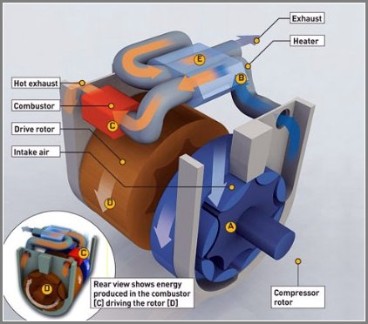
  The best application I have seen so far of Gerotors being used as combustion sources is produced by a company called Star Rotor. While these guys still have some nagging issues regarding sealing the engine and temperature variances, the design is flawless in concept.
  The development of electric engines has progressed in leaps and bounds. The technology is low friction, high torque, and totally emission free. It's the ideal choice for delivering performance without producing green house gasses. However, the current application of this design is not being used at its prime capicity.
